
Transcript of the questions asked and the answers given by Jean-Claude Trichet, President of the ECB, and Lucas Papademos, Vice-President of the ECB Question: Did you discuss the pace and timing of future rate hikes and, in that regard, I noticed that you say that you will be monitoring very closely the conditions moving forward. Previously, when you have used that phraseology, you have proceeded with an interest rate increase two meetings later. So, if in case your baseline scenario is confirmed, would it be a reasonable assumption to be looking toward October? Trichet: I stick to what I said in my introductory statement. As you heard, it is our sentiment that if our baseline scenario is confirmed, we will progressively withdraw the present monetary accommodation. That is clearly the way we are looking at the situation and also the way that observers are looking at the situation. I do not want to say anything else, but we will continue to monitor the situation very closely. I will not comment on your own hypothesis.Question: I like to try you again on that question: what was the flavour of the discussion on the Council today, are we more likely to see a step in two months or three months? My second question is: the Bank of England today raised interest rates somewhat unexpectedly. Do you think that markets and observers are in any way underestimating the threat inflation poses at the moment? And the extent to which central banks will raise rates to counter that? Trichet: I will not comment on the decision of the Bank of England, which happened to be on exactly the same day. As regards our own decision, it was not unexpected. And as regards the way we look at the future, it has been absolutely clear since the very beginning of our first move in December last year that we do not decide ex-ante future decisions over the medium run. I said that we were not pre-committed to any two months, three months or any kind of rhythm. I have always myself said that we depend on the confirmation of our baseline scenario, on facts and figures. We will see what will be the judgement of the Governing Council when the time comes. Again we are not pre-committed in any respect. We will do all what we judge appropriate, depending again on the wealth of information that we have, coming from our own analysis and the very impressive wealth of information and analysis from public and private institutions. As regards the position of central banks in general, as far as you refer not only to us, but to the community of central banks, I would say that we all consider that being credible in our mandate to deliver price stability not only on a short-term basis, but on the medium and long-term basis, and therefore, solidly anchoring inflationary expectations, is of the essence. It is the trust of all central banks I know, and certainly of those with which I am in permanent contact. It is of course, as you know well, our very strong belief. We have a mandate, we are faithful to our mandate and we believe that it is the best way to help growth to be sustainable and job creation which, very fortunately, is now visible, sustainable in the medium and long run.Question: If you compare the situation now to what we have observed at the last meeting, we had some encouraging data but we also had the conflict in the Middle East, would you – looking at the risks to price stability and growth –think the risks have increased or decreased for growth in recent weeks? And the same please for price stability? Trichet: As I said, we depend permanently on new information. I also mentioned the fact that we live in a world where uncertainty, and indeed great uncertainty, is unavoidable. This is particularly the case as regards the geopolitical risks that I mentioned. I would say that on a short to medium-term basis, the risks to growth are in our opinion balanced. On a longer-term horizon, we see a number of downward risks. That is the best summing-up of our present view. On the particular impact of geopolitical risks, I do not see, at this very moment that these have contributed in any significant fashion to hampering growth. But it is clearly a risk that has to be taken into consideration. Fortunately, I have not seen, and I hope strongly not to see, an impact of these events on global growth. Question: Three brief questions. After the last policy meeting, a lot of the ECB watchers shared the view that the Council would prefer to move gradually on interest rates, unless it was unavoidable. And to do so more frequently, if needed, than over a sharp interest rate move. Would you say that is a fair appraisal of the Governing Council’s sentiment? And the second question is: do you believe that concerns about financial stability or financial imbalances in the euro area have increased since the early months of this year? And, finally, you mentioned just now the moderation in M3 growth. I would just like to ask if you feel that is a sign in your view that policy changes are starting to take effect in the euro area? Trichet: On your first question, I already said, that we are not pre-committed in any respect. We do what we judge to be appropriate and necessary, and I think that the market has understood that pretty well. There is no particular rhythm of three or two months. We are not pre-committed as regards the frequency of our progressive withdrawal of monetary accommodation, if facts and figures confirm our baseline scenario. And we will continue to behave in this fashion.I will not comment on financial stability. I do not see any element that would be significant at this stage. On M3, as I said, we have observed a certain signal which, of course, is difficult to interpret at this time. The decisions we took since December as well as the fact that the market is anticipating our decisions, and that the yield curve is showing an upward trend, all this has played a role. Is it a sufficiently significant influence to trigger what we are observing now and marks the beginning of a deceleration? We will see. Of course, I prefer what we have observed n the last statistics to the previous evolution. Note the figures are still very impressive. When you look at the figures we have, particularly as regards loans to the private sector, loans to non-financial corporations – which are increasing at a pace of 11.5% in June, compared with 11.3% in May – we still have very strong dynamics. And the pace continues to increase as regards that particular segment of loans, even if loans to the private sector in general decreased slightly to 11% in June from 11.4% in May. But again it is something that we will continue to look at very carefully. Look at the components of M3. Look at its counterparts. And better understand all the dynamics that are at stake. Again I will not, at this stage, say “we now clearly see the first signs that what we have been doing in increasing our interest rates is working”. But our policy changes are, of course, playing a role because the interest rates applied by the banks that are granting those loans are rising. Question: I have two brief questions. First, I wonder if you can tell us whether the decision today was unanimous? And, secondly, you have just stressed the Bank’s mandate of price stability. But projections, including the Eurosystem’s own, forecast that growth will slow down in 2007. So I wonder whether you can tell us whether there has been a discussion of a situation in which you have simultaneously rising inflation pressures and slowing growth, and what that discussion was like? Trichet: First of all, the decision in favour of a 25 basis point increase today was overwhelmingly supported by the Governing Council. As regards our assessment on the risks to price stability and to growth I have told you clearly that we saw the risks to price stability over the short, medium and long term to be on the upside. We consider the risks for growth to be balanced, on a short to medium-term basis, and to be on the downside over the longer term. That is our present analysis. That being said our mandate is clear. We have to deliver price stability. It is not only the mandate given to us by the Treaty but also our responsibility vis-à-vis the households of Europe and the fellow citizens of Europe, who expect us to deliver price stability. It is also the working assumption of the social partners. And this is the reason why we tell them: be responsible yourself, because we will take care of price stability. It is also essential because it is through our credibility that we anchor inflationary expectations. As I said in my introductory statement in the euro area we have long-term rates that are favourable to sustainable growth and sustainable job creation, in particular, because we are solidly anchoring inflationary expectations. We see no contradiction between our mandate and sustainable growth and sustainable job creation.Question: Could you give us the flavour of your thinking regarding the pass-through of past oil price rises and commodity price rises in general through the price chain, whatever you want to call it. There has been some evidence in the surveys that this is creeping closer to the consumer, but perhaps this is not quite there yet. My second question is on the fiscal side of things. I wonder if you could just elaborate a little bit on your point of needing change on the expenditure side. My understanding of the fiscal structures of the Stability Pact was always that this was one area where governments preserved, and indeed deserved, their leeway as to how they chose to balance their budgets. It surprises me somewhat that you appear to be telling euro area governments that they should not raise taxes, that they should cut spending. And my third question is just a very small factual one. I realise that Slovenia is a very small new member of the euro area. But does this have any sort of one-off effect on the statistics or what one observes on the economic activity in the euro area as a whole, since its composition is changing, however slightly. Trichet: On the first point, I mentioned the risks that we saw to prices and I mentioned a number of those risks – such as the increase in the price of oil – which we have observed in the past, unfortunately, I have to say, and which are still a risk. I mentioned additional increases in prices – I am not mentioning past increases that have already been decided and fully incorporated in our own projections, but rather the possible future increases in administrative prices and indirect taxes – and I mentioned the traditional – in this press conference – second-round effects, in particular wages and salaries increases. There is also the point which you have mentioned, which we consider ourselves to be very important and which has to be examined very carefully, namely what we call a stronger than currently anticipated pass-through of past oil prices and I could add of past commodity prices. There are increases in input prices that do not materialise immediately in increases in output prices, in manufacturing goods or in the services prices concerned, but this process is going on, on a continuing basis and that is something which has to be followed very carefully. That would be my comment on your first question. Just because you don’t see an immediate effect, an immediate mechanistic effect of these increases in oil and commodities prices, that does not mean that you do not have in the pipeline costs that would push prices up later on. This is difference from the second-round effects.On the fiscal side, I would only say that we have always told our interlocutors, the Commission and the executive branches, that in delivering the appropriate fiscal position required by the Stability and Growth Pact, in an overwhelming majority of cases, to be as sound and reasonable as possible on the expenditure side is the first best option. Then, if something remains to be done, in order to meet this Stability and Growth Pact requirement, you have to do what remains necessary on the receipt side namely taxation. But the first best option is always to have a sound handling of the expenditure side. There is nothing new there; we have always said that. And I have to say, that it is particularly true in the euro area, where the level of public expenditure – public spending as a proportion of GDP – is quite significantly higher than the OECD average or the G7 average. So we have to be fully conscious of that structural difference. As regards Slovenia, of course we are very happy to be enlarging the euro area and we will have a fully fledged set of statistics that will permit a full comparison of what happens from 1 January next year with what has happened before. So, you’ll have all possibilities to compare statistics of the highest quality on a state of the art professional basis. But allow me to stress that we had an important message in relation with Slovenia. Perhaps you have noticed that we’ve said that we will be, when next year starts, in a euro area with 13 economies instead of 12 sharing a common destiny with a single currency. We consider that it would be very opportune for labour mobility between Slovenia and the European Union and in particular with all the members of the euro area, to be totally free without barriers within a single market area with a single currency, full labour mobility is absolutely necessary. Question: Mr Trichet, I have two questions. You said that there was an overwhelming majority in favour of the decision you made today in the Governing Council. I take from that word that there were perhaps two or three members who might have preferred, at least at the start of the discussion, another decision. What did they want? Did these members not want to move at all with a rate hike today or did they prefer to have a larger hike? Trichet: Let me be more precise. By “overwhelming majority” I meant a fully-fledged consensus. There were no other views on today’s decision. Question: The second question I have relates to the economic outlook in the short and medium term and then the medium to longer term. There are a lot of economists seeing that there might be some kind of cooling down in the euro area economy. Do you have a discussion in the Governing Council – assuming that you want to normalise interest rates, whatever you regard as a normal level – do you have a discussion in the Council that the time is running out for interest rate hikes? Trichet: First of all, the “normal level” for us is the level which permits us to deliver price stability over time, be credible in the delivery of price stability over time and solidly anchor inflationary expectations. There is our compass and the needle of the compass. Second, as I have said very often, we are pragmatic. Everybody knows what our definition of price stability is. Everybody knows what our determination is. Everybody knows what our two-pillar monetary policy strategy is. Now, we will do what is necessary, depending on facts and figures and new events. At this stage, I will not comment further. Of course, we will have new projections, as you might expect. We have our present projections. We have our baseline scenario and we might have a lot of new events – price of oil, geopolitical uncertainty, also good surprises that we might have in the rest of the world. We could also be – I do not exclude that at all – surprised by the dynamism of the domestic economy of the euro area. We have a number – as you know very well, better than anybody – of survey indicators that are very impressive and that are still not materialising fully – particularly in the service sector, where the survey indicators are much better than the present so-called hard figures. I do not believe that hard figures are the only reliable figures or that survey figures are the only reliable figures. We have to make the best out of this wealth of information, but it is clear that there are areas where we could have good surprises. Again, even if I said that our own sentiment for growth was balanced on a short-term basis, it means that we have downside risks on the one hand, but we have also upside chances on the other hand. And we have to take that into consideration also. That being said, you can count on us to do what we judge necessary. If our baseline scenario is confirmed, if our assumptions are confirmed, then we will progressively withdraw monetary accommodation. Question: Mr President, you mentioned that the euro area will grow around a potential rate? Can you define “potential rate”? The potential rate was, in former days, at the beginning of the euro area eight years ago, approximately 2 ½ %. Some economists said that it is lower now. What is necessary to increase this rate? And what is the defined “potential rate” you have mentioned without giving a figure? Because the potential rate was, in former days, a very important number for anchoring price stability; I remember the “M3 reference value”. Trichet: You know that there are a number of analyses which do not converge in the direction of an overall consensus on our growth potential. And you have also to distinguish the short-term growth potential, and the medium and long-term growth potential. Let me first address the very important issue of labour productivity increases. I would like to take advantage of your question, which is extraordinarily important, to mention the fact that our main handicap in terms of growth potential remains the fact that productivity growth is much too small in the euro area. During the last five years, say, we have been at a level which is half the level observed in the United States in terms yearly increase of labour productivity and which is also half the level observed in the economies of the euro area in the eighties. If we were at the level that we had in the eighties, or if we were at the level which is presently posted by the United States, we would have a growth potential which would be significantly higher. This is the reason why we are calling for structural reforms, because we firmly believe that it is the lack of structural reforms particularly in a period of very rapid changes in science, technology, and globalisation, that explains why we have a disappointing level of increase of labour productivity. That being said, you asked for figures. We will not underwrite any figures ourselves. But I can mention a number of studies which suggest that, for the euro area as a whole, we could be at the level of 1.9%. Others suggest that we are in-between 2% and 2.5%, but possibly much closer to 2% than to 2.5%. You have a number of such analyses. And again, I will not underwrite any figures, but I would say that if you said in the present situation that perhaps 2% might be an order of magnitude it would not necessarily be absurd. But, again, one has to accept there are various methodologies, various views – short-term and more medium and long-term. In any case, our growth potential should be much higher. It is not a parameter which is fixed and immobile. It depends on what we do. And it can be much higher. Question: Do you remember your dinner speech on 31 March at the IIF meeting in Zurich? There you mentioned a figure: was it 1.8 or 1.9? Trichet: My memory is that I mentioned a figure of around 1.9.Question: You referred to the survey data that has been relatively good. However, some of it has started to soften a little bit, to come off the peaks. Has the business cycle in the euro zone peaked? And secondly, on budget consolidation, we have numbers from Germany and some numbers from Italy, and economists are starting to estimate what impact this will have on growth in 2007. The estimates range between 0.5 and 1.3 – those that I have seen – in terms of reducing GDP growth next year. What is your estimate of what impact fiscal consolidation could have next year? Trichet: Taking the second question first. You know that we consider that fiscal consolidation – at the present level of the risks and dangers that exist in the various economies of the euro area today – is improving the confidence of entrepreneurs, the confidence of economic agents in general and the confidence of households. All the mechanistic computations that would go through mechanistic models are not necessarily reliable, because they do not take into account what I would call the Ricardian channel. Never forget that, when you are credible in a medium-term path of fiscal consolidation, you are improving confidence. And confidence is one of the ingredients that is decisive to foster growth: fortunately, we are in an episode of improving confidence in Europe. On your first question, I would say that we are totally pragmatic: we will see what happens. I have no judgement on whether some survey indicators have peaked or not. I have mentioned that, particularly in the domain of services, we still see a large gap between the level of survey indicators, which is very flattering and very encouraging, and the level of the so-called hard figures. My intuition is that the hard figures themselves will go up. But we will see what happens, and again, we have to be cautious. Reality is reality, facts are facts, and we have to be humble in front of facts. Therefore I have no comment on whether some survey indicators have peaked or not. But, as you know, some of them are at historical levels which are very flattering. Question: You said in today’s statement that rates are still accommodative and that the further withdrawal of accommodation will be warranted if your main scenario continues to be confirmed. The markets are debating whether rates will reach 3.25% or 3.5% by the end of the year. It sounds from today’s comments very much like you still see some room to move; it does not sound like there is an imminent end to your tightening cycle. I wonder if you could give us your opinion on whether you see that there is some way to go before rates are no longer accommodative. Trichet: Again, I have said all I have to say on that. I can only confirm to you that, if our scenario and our assumptions are confirmed, there will be a progressive alleviation of the monetary accommodation that exists today. I have said that for quite a period of time, and you can see what we have been doing.Let me also mention something which has been discussed in the Governing Council, namely the Doha round. You did not ask many questions on this issue but it is a very important for us. We have always said that a positive conclusion of this round was of the essence. The fact that we are in a difficult episode is something that we follow very carefully. We consider that it is one of the risks that I have constantly mentioned. I would call on all governments concerned to be fully aware of what is at stake in this round of negotiations to make their best efforts to cope with the current difficulties and to find a solution.

[관련키워드]


[뉴스핌 베스트 기사]
 사진
사진
충청·남부 곳곳 소나기…한낮 33도
[서울=뉴스핌] 송은정 기자 = 화요일인 18일은 충청권과 남부지방 중심으로 곳곳에서 소나기가 내릴 전망이다.
이날 기상청과 케이웨더에 따르면 중부지방 구름이 많겠으나 남부지방과 제주도가 대체로 흐리겠다. 오전에는 경상권과 전남 남해안 중심으로 비가 오고 오후에는 충청권과 남부지방 중심으로 소나기가 내리겠다.
화요일인 18일은 경남 남해안 중심으로 비가 내리고 모레 오후까지 소나기와 돌풍, 천둥·번개에 유의해야겠다. [사진=뉴스핌DB]
예상 강수량은 대전·충남 남부내륙, 충북 남부 5~30mm다. 전북 남동부와 광주·전남은 5~30mm, 부산·울산·경남·대구·경북 남부는 5~30mm다.
아침 최저기온은 21~25도로 예상된다. ▲서울 24도 ▲인천 24도 ▲수원 23도 ▲춘천 23도 ▲강릉 23도 ▲청주 24도 ▲대전 24도 ▲전주 24도 ▲광주 24도 ▲대구 24도 ▲부산 25도 ▲울산 24도 ▲제주 26도다.
낮 최고기온은 30~33도로 예상된다. ▲서울 32도 ▲인천 31도 ▲수원 32도 ▲춘천 31도 ▲강릉 32도 ▲청주 32도 ▲대전 32도 ▲전주 32도 ▲광주 32도 ▲대구 32도 ▲부산 31도 ▲울산 33도 ▲제주 32도다.
에어코리아에 따르면 이날 미세먼지는 전 권역이 '좋음'으로 예상된다.
바다의 물결은 서해 앞바다 0.5m, 남해 앞바다 0.5~1.5m, 동해 앞바다 0.5~2.0m로 일겠다.
yuniya@newspim.com
2026-08-18 06:30
 사진
사진
美 30년물 국채금리 급등 5.31%
[시드니=뉴스핌] 권지언 특파원 = 미국 30년물 국채 금리가 17일(현지시간) 2007년 이후 최고 수준으로 올랐다. 미국의 재정 상황에 대한 우려가 인공지능(AI) 관련 기업들의 대규모 회사채 발행과 맞물리면서 국채 금리를 끌어올렸다.
벤치마크인 10년물 국채 수익률은 2.79bp(1bp=0.01%포인트) 상승한 4.724%를 기록했다. 30년물 수익률은 4.43bp 오른 5.3103%로 2007년 이후 최고 수준을 기록했다.
바클레이스의 안슐 프라단 애널리스트는 월요일 보고서에서 "부진한 경제지표는 장기물 국채 금리를 낮췄어야 했다"며 "그런데도 30년물 국채는 2001년 이후 가장 높은 금리로 입찰됐고, 이후 금리는 오히려 더 상승했다"고 지적했다.
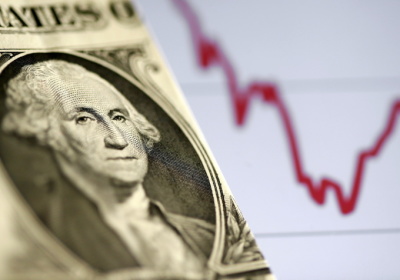
미 달러화.[사진=로이터 뉴스핌]
그는 "악화하는 재정 전망, AI에 따른 기업들의 장기물 채권 공급 확대, 가격에 민감해진 투자자층이 그 이유를 설명하는 데 도움이 된다"고 분석했다.
이날 블룸버그통신도 'AI가 국채 금리를 밀어 올리고 있다'는 제목의 기사에서 빅테크의 AI 차입이 미국의 장기 금리를 높은 수준에 묶어두고 있다고 지적했다. 그러면서 신용도가 매우 높은 기업이 국채보다 훨씬 나은 조건을 제시하자 국채를 팔아 그 돈으로 회사채를 사는 흐름이 나타나고 있다고 설명했다.
이번 주 주요 경제지표 발표가 많지 않은 상황에서 투자자들은 중동 정세와 연방준비제도(Fed·연준)의 통화정책 향방에도 관심을 보였다.
이란의 한 고위 당국자는 이날 로이터에 이란이 대응 태세를 "전면 공세"로 전환하기로 결정했다고 밝혔다. 도널드 트럼프 미국 대통령 역시 폭스뉴스를 통해 이란이 항복해야 한다고 압박하면서 중동의 지정학적 긴장이 지속되고 있다.
다만 시장은 장기화하는 미·이란 갈등에 점차 익숙해지는 분위기다.
DRW 트레이딩의 루 브리언 시장 전략가는 "지나치게 자극적인 헤드라인에 시장이 조금 무뎌지고 있는 시점에 이른 것 같다"고 말했다.
통화정책 전망에 민감한 2년물 국채 수익률은 0.9bp 상승한 4.18%를 기록했고, 2년물과 10년물 국채 금리 차이는 54.7bp로 확대됐다.
◆ 수요일 FOMC 의사록·20년물 입찰…채권시장 변동성 변수
이번 주 채권시장에서는 수요일이 주요 분기점이 될 전망으로, 연준은 이날 최근 연방공개시장위원회(FOMC) 회의 의사록을 공개한다.
지난달 케빈 워시 연준 의장의 첫 기자회견 이후 채권시장이 불안정한 반응을 보였던 만큼 의사록에서 향후 금리 경로에 대한 단서를 찾으려는 투자자들의 관심이 클 것으로 예상된다.
DRW 트레이딩의 브리언 전략가는 "워시는 시장에서 그가 연준 내에서 자신의 독자적인 판단을 하는 인물이라기보다 트럼프 측 인사라는 생각을 완전히 없애지는 못했다"고 지적했다.
이날 뉴욕 연방준비은행이 발표한 뉴욕주 제조업 활동 지표는 4년여 만에 가장 높은 수준으로 급등해 미국 경기의 일부 회복 신호를 보여줬다.
미 재무부의 20년물 국채 입찰도 같은 날 예정돼 있어 장기물에 대한 투자자 수요를 가늠할 주요 이벤트로 꼽힌다.
한편 시장이 반영하는 중장기 인플레이션 기대는 비교적 안정적이다. 5년물 물가연동국채(TIPS) 기대인플레이션율은 2.255%, 10년물은 2.284%를 기록했다. 이는 시장이 향후 10년간 미국의 연평균 물가상승률을 약 2.3% 수준으로 예상하고 있음을 의미한다.
◆ 연준 금리 인상 기대 후퇴에 달러 약세
달러화는 연방준비제도(Fed·연준)의 추가 금리 인상 가능성이 낮아지면서 약세를 보였다. 최근 발표된 미국 경제지표가 잇따라 예상보다 부진하게 나오면서 시장의 연준 금리 인상 전망이 후퇴한 영향이다.
지난주 발표된 7월 소비자물가지수(CPI)와 생산자물가지수(PPI)는 물가 압력이 다소 완화되고 있음을 시사했다. 여기에 7월 소매판매가 예상 밖으로 감소하면서 미국 경제의 성장세가 기존 전망만큼 견조하지 않을 수 있다는 우려도 커졌다. 이에 시장에서는 연준의 9월 금리 인상 가능성을 한층 낮게 반영했다.
주요 통화 대비 달러화 가치를 보여주는 달러인덱스는 0.06% 내린 99.6을 기록했고, 유로화는 0.09% 오른 1.1579달러에 거래됐다. 유로화는 장중 1.1614달러까지 올라 6월 17일 이후 최고치를 기록했다.
시장의 시선은 향후 연준의 통화정책 신호로 향하고 있다.
특히 최근 경기·물가 지표가 잇따라 둔화하면서 연준이 당분간 금리 인상을 서두르지 않을 것이란 전망이 달러화에 추가 하방 압력을 가할 수 있다는 분석이다.
엔화는 장 초반 상승분을 반납하고 달러당 159.49엔 수준으로 0.11% 하락했다. 일본의 경제성장률이 예상보다 부진하게 나온 것도 엔화에 부담이 됐다.
앞서 일본과 미국 당국은 엔화 약세를 막기 위해 7월 말 외환시장에 개입했다.
모간스탠리의 데이비드 애덤스가 이끄는 애널리스트들은 투자자 노트에서 "시장이 일본은행의 금리 인상 사이클이 더욱 가팔라질 것으로 반영하고 있지만, 글로벌 위험선호가 강하고 미국의 최종금리 전망이 높은 수준을 유지한다면 미국의 물가 상승률이 다소 완만하게 나온 상황에서도 달러/엔 환율은 상승할 수 있다"고 분석했다.
kwonjiun@newspim.com
2026-08-18 06:39